


Referred Link - https://www.mountaingoatsoftware.com/blog/my-most-popular-blog-posts-from-2018

10) Three Questions to Determine If an Organization Is Agile
I wrote this after someone told me he’d recently taken a job with a company that had told him they were agile. But once he started there, he discovered they were quite far from being agile. This post offers three questions you can ask during an interview to help determine if the organization is truly agile or just paying lip service to it.
9) Self-Organizing Teams Are Not Put Together Randomly
There is a lot of misinformation about self-organizing teams. One myth is that management cannot exert any influence or control over a self-organizing team. This post refers back to the original 1986 paper on Scrum and describes the subtle influence management should exert on a self-organizing team.
8) How to Ensure You’re Working on the Most Important Items Each Iteration
A lot of agile advice says to start each iteration by picking the most important things. This can lead to teams being too reactionary and just putting out fires and solving other crises rather than working on items that are strategically important. Here’s how to solve that problem.
7) What Happens & When During a Sprint
I get a lot of questions about what day should we do this meeting or when should this happen. I wrote this post to answer all those questions for all sprints from one to four weeks. As a bonus, I had my designer turn it into a great infographic you can use.
6) Six Guidelines for Saying No to a Stakeholder
No one likes to be told no—and stakeholders might like it least of all—yet, sometimes a team does need to say no to stakeholders. This post shares some tips on doing so.
5) Include All Team Members in Sprint Meetings. Yes, Them Too.
Agile works best when accompanied by a whole-team mindset. This occurs when everyone is part of one team with one goal instead of working as multiple sub-teams. This post makes the argument that you want to avoid rules that prohibit some people from participating in some Scrum meetings.
4) An Agile Team Name Generator
It can be hard to come up with a name for your team. This post was written to do it for you. Answer a few simple questions about your team and discover your “perfect” team name.
3) Ten Things the Beatles Taught Me About Being Agile
I’m a huge Beatles fan. I wrote this one day while binge-listening to all of their albums and realizing how much agile wisdom was encoded in their songs. And I didn’t have to play any of them backwards to hear that advice.
2) Ten Sentences with all the Scrum Master Advice You’ll Ever Need
Well, I’m sure ten sentences don’t cover everything. But I sure tried to distill as much as a Scrum Master would need into as few bits of advice as possible.
1) The Difference Between a Professional and an Amateur
My most popular post was written in a fit of rage after a conversation with a Scrum Master. He kept telling me, “But my team won’t do that” and “They won’t do that either.” I had to break it to him that he was working with a team of amateurs rather than professionals.
Referred Link
https://philmckinney.com/six-practices-of-successful-innovators/

https://philmckinney.com/six-practices-of-successful-innovators/
Successful innovators seek out mentors.
One of the things successful innovators have in common is that they seek out wise mentors. Mentors usually have reached a level of success in their professional experience. They may offer guidance and advice in both professional and personal areas.
Mentors are an important aspect of growing as an innovator. The smart innovator knows he or she can’t go it alone. A mentor can make the difference between taking the right path or veering off in the wrong direction. Most successful innovators have at some point been guided by a mentor, a trusted advisor. In some cases, successful innovators have had multiple mentors at different stages of their career. Steve Jobs, in the Walter Isaacson’s biography, acknowledged key people who influenced his career and life. In fact, Bill Campbell, who mentored Steve, mentored an entire hall of fame of successful innovators.
Early in my career, my mentor, Bob Davis, set the course for my career. Without his influence, advice, and guidance, I would not have achieved the success I’ve had in my career. My blog, podcast, and book are my efforts to share my experience and knowledge. My desire is to build a community and encourage others in the innovation arena. It’s my way to pay back Bob for his impact on my life.
When you find that great mentor and success ensues, you’re motivated to pay it forward. Richard Branson credits success with Virgin Atlantic to the mentorship he received from Sir Freddie Laker. As founder of Laker Airways, Sir Laker had the experience and expertise and was willing to share that. Years later, Branson has launched Virgin Startup to help a new generation of entrepreneurs.
Successful innovators surround themselves with like-minded people.
Successful innovators engage with people who have similar values and goals. They put themselves in an environment where they can talk about their ideas and grow in a creative sense.
A group known as “The Vagabonds”, were the innovators of their day. Their ranks included Thomas Edison, Henry Ford, Harvey Firestone, John Burroughs and were joined by others. They banded together to go on annual camping expeditions. They took a break from their busy lives, got outdoors, and enjoyed nature. But they also engaged in the exchange of ideas. Wouldn’t you love to be sitting around the campfire listening in? Here were a group of men with vastly different expertise and endeavors. Yet, they had the common ground of being innovative thinkers.
Finding an environment to share your ideas and encourage others is another step towards success. Today, there are a number of ways to connect with other innovators of diverse backgrounds. One venue I attend is the annual TED conference. It’s a great way to interact with others at the forefront of innovative thinking. Are you in search of place for open exchange of innovation ideas? The Innovator’s Community is a private, online group that allows you to engage with fellow innovators.
Successful innovators are not afraid to step out of the comfort zone.
Successful innovators are not afraid to leave their comfort zones. Sometimes this means venturing out on your own when the people around you don’t see your vision. It could also mean getting out of your routine, the comfort of the office, or cushy job, and exploring what’s out there. Maybe it’s trying something outrageous that you’ve never dared to do before. Getting out of your comfort zone can open up new avenues and give you a fresh perspective.
It wasn’t until his sixties that Harland Sanders developed his successful fried chicken franchise. Before that, he had dabbled in cooking and serving his secret recipe fried chicken. But it wasn’t his main source of income. Until his franchising success, he went through a range of jobs. Railroad worker, insurance salesman, ferry boat owner, lawyer, among other things. Harland was always trying something new and different. Whether it was out of necessity or choice, Harland never sat back and got comfortable.
Jeff Bezos was in a successful position at investment firm D.E. Shaw when he decided to leave it, borrow money, and start Amazon. Stepping away from financial security into the unknown with potential for failure did not concern him. What concerned him were his regrets if he didn’t take that chance.
Successful innovators value alternative approaches and unique perspectives.
Another quality that successful innovators possess is that they try to see things from different perspectives. They look for alternative approaches. They step out of their personal experiences and biases to examine what others are thinking and why.
In the eighteenth century, seafarers faced uncertain danger at sea. Only half of the navigation equation was known. Sailors could determine latitude, but no one had figured out an accurate way to find longitude. This caused loss of ships and lives due to the missing piece in the navigation puzzle. Astronomers, scientists, and mariners worked to find a solution. The British government opened up an opportunity to the public to solve the problem. The government offered the Longitude prize for the person who could develop an accurate way to measure longitude.
The unlikely winner was a clockmaker, not an astronomer, mariner, or scientist. Even Isaac Newton doubted the unique approach of John Harrison. Harrison knew clocks and carpentry. He developed an alternative approach to those proposed by leading scientists and astronomers. His maritime clock could maintain time accurately of a reference point despite conditions at sea. Harrison faced criticism. His perspective was not well received. The Board of Longitude, who reviewed and awarded the Longitude Prize, were a smug bunch. Their doubts of Harrison’s solution delayed the process. His innovation took many years to develop and refine. The naysayers only compelled him to perfect his marine clock. He stuck with it despite the obstacles. By applying his skills and knowledge in one area, he was able to solve a problem in a seemingly unrelated field.
Seek out honest opinions and don’t be held back by assumptions. Even if you’re a lone innovator not working with a team, you can still find people to give a fresh perspective. Ask someone with a different background to review your product. Seek out a younger or older family member’s opinion. Actively listen to others’ points of view to enhance your own understanding. Listening to diverse opinions will give you a better grasp of viewpoints in the greater population. Talk to people who think differently from you. Maybe it’s someone whose opinion you usually disagree with. They may point out flaws in your approach that help you perfect your product or possibly decide to pivot.
Successful innovators never stop asking questions.
Successful innovators have an innate curiosity. This means they never stop asking questions. By asking the right questions, they are challenging assumptions and exploring new ways of thinking about things. They refuse to accept the premise that, “This is the way it’s always been done.” Their questions compel them to make radical changes to the way things are done. As result, these successful innovators create major disruption to industries. Innovators remember specific questions they asked that led to their successful ventures. In a study on successful innovators, Michael Dell told researchers(Harvard Business Review, Dec 2009) he wondered “why a computer cost five times as much as the sum of its parts.”
I firmly believe that asking questions is the life breath of innovation. Hence, I developed the Killer Questions to spark the thought process for innovation.
Successful innovators set aside time to think.
Both deep focus thinking and spontaneous thoughts generated through moments of relaxation can produce innovative ideas and solutions. People who are too busy with daily tasks and meeting expectations, don’t have the freedom to allow their mind to wander. The mind needs that free space to be creative. You have to give room for thoughts. Successful innovators set aside time to think. This means setting aside a time and a place. It can also mean taking a break from work to help your mind relax. Some of the best ideas happen while relaxing or doing something enjoyable that is unrelated to work. Observing nature, like the Vagabonds did, away from daily tasks opens the mind to new perspectives.
These six practices are by no means a comprehensive list. These are just some of the practices you can adopt and use as you strive towards your innovation goals.
Referred Link
https://www.telerik.com/blogs/creating-an-angular-7-app-with-aspnet-core-step-by-step-guide

https://www.telerik.com/blogs/creating-an-angular-7-app-with-aspnet-core-step-by-step-guide
Finally, we have a new major version of Angular, which is version 7. The reason I use the word “finally” is not just because people were waiting for the latest major release of Angular, but also because there were quite a few rumors about the features Angular 7 would offer. Especially since the April Fool’s article published with the title "Top 4 Changes Coming In Angular 7.0."
The Angular team officially announced Angular 7 just a few days back, and Angular 7 has introduced some pretty awesome features, like improvements in Angular Material, Performance improvements, and CLI improvements to name a few.
In this article:
- We will see how to create Angular 7 applications with ASP.NET Core SPA template
- We will also see the features introduced with this major release
- I will demo some of the Angular Material features introduced with Angular 7
Angular 7 With SPA Template
Let’s first see how to create an Angular 7 application with ASP.NET Core SPA templates using Visual Studio 2017. There are more ways than one to create an Angular 7 application with .NET Core, but let’s look at this one.
Make sure you have installed Visual Studio 2017 and the latest .NET Core SDK, as well as the latest version of Node.
In this approach, we will use the Angular template with ASP .NET Core.
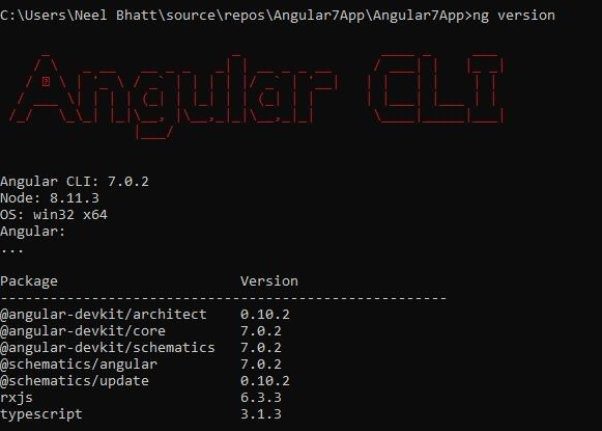
Before starting, let us first update our Angular CLI to version 7. For this, open command prompt and run the command:
npm i -g @angular/cli
Once done, your CLI will be updated to version 7:
Create the Angular Application Using .NET Core 2.1 Template in VS 2017
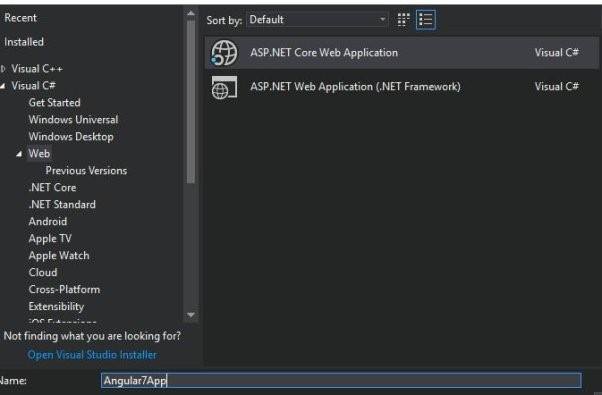
Once you have all these installed, open your Visual Studio 2017 -> Create New Project -> Select Core Web application:
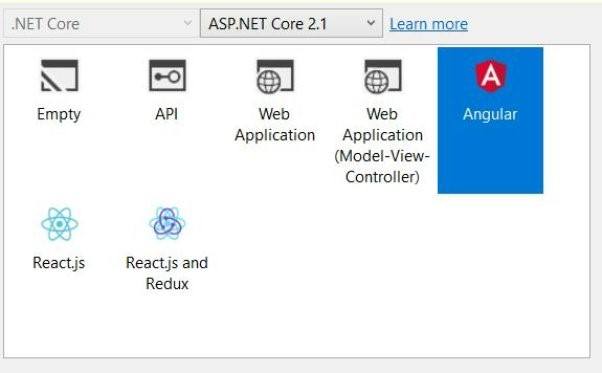
Click on “Ok,” and, in the next window, select Angular as shown below:
Visual Studio will create a well-structured application for you, which is currently in Angular 5.
Angular 7
If you open the package.json file in the ClientApp folder, you will notice the Angular version is 5.2, but we want to create an Angular 7 application.
So go to File Explorer and delete the ClientApp folder.
DATE AND TIME
LOCATION
Agenda:
9.30 AM - 10.00 AM - Registrations
10.00 AM - 10.15 AM - Keynote, Deepak Rajendran, Microsoft
10.15 AM - 11.00 AM - Building modern conversations in Office365 with add-ins and actionable messages, Arunkumaran Varadharajan, Anjana Valsan, Kallu Sushma, Microsoft
11.00 AM - 11:15 AM - Break
11.15 AM - 12.15 PM - Power of Graph API & demo by Sathish Nadarajan, Microsoft MVP
12.15 PM - 1.00 PM - Immersive experiences on Microsoft Teams App Platform by Vishrut Shukla, Microsoft
1.00 PM - 2.00 PM - Lunch
2.00 PM - 3.15 PM - Hands on Labs - Teams Bot by Jayanthi & ShanthaKumar, C#-Corner MVP
3.15 PM - 3.30 PM - Break
3.30 PM - 4.45 PM - How to Elevate SPFX solution using Custom Web API with SharePoint Online by Manoj Mittal, Technical Architect at Mindtree Ltd
*Lunch will be provided
Registration Link
https://www.eventbrite.com/e/global-office-365-developer-bootcamp-tickets-48086187080?aff=ebdssbdestsearch


 Posts


