Powered by Blogger.
🌏World roaming Software Technology Evangelist. Proud Indian, Bought up from Coimbatore, Tamilnadu, INDIA. Pointing towards share of Knowledge. 😎
  • Programming ▼
    • DotNet
      • C# Coding Standards
    • Cloud
    • Microsoft 365/ SharePoint
    • SQL
    • Angular / ReactJS / NodeJS
    • Salesforce
    • Magento
    • Python
    • Mobile App Development
    • Database
    • DevOps
    • Automation Testing
    • User Experience
  • Learning ▼
    • Roadmap
    • Trainings
    • E-Books
    • Quick References
    • Certifications
    • Self Improvement
    • Productivity
    • TED Talks
    • Kids Programming
  • SW Engineering ▼
    • Agile
    • Software Design
    • Architecture Samples
    • Best Practises
    • Technologies and Tools
    • Open Sources
    • Free Softwares
  • Leadership ▼
    • Program Management
    • Product Management
    • Project Management
    • People Management
  • Job Search ▼
    • Interview Tips
    • Career Handbook
    • Resume Templates
    • Sample Profiles
    • Cover Letter Samples
    • HR Interview Questions
    • Job Websites List
    • Coding Site Links
    • TedEx Talks
    • International Jobs
  • Emerging ▼
    • Innovation
    • Machine Learning
    • Artificial Intelligence
    • Generative AI
    • AI Tools
    • Big Data
    • Data Science
    • Data Analytics & Visualization
    • Cyber Security
    • Microsoft Azure
    • Amazon Web Services
    • Cryptography
    • ChatBots
    • Internet of Things (IoT)
    • Mixed Reality /AR/VR
  • Misc. ▼
    • Travel
    • Photography
    • Health Tips
    • Medical Tips
    • Home Designs
    • Gardening
  • Samples ▼
    • GitHub
    • Executive Dashboard
    • Chatbot
    • Image Generator
    • Jay's Link Tree
  • Favourites▼
    • Saran Kitchen Hut
    • World of Akshu
    • Saran & Akshu - Other Links

Good Certification preparation for #Azure #AI #Data professionals for Mastering Fundamentals

Link - https://www.youtube.com/playlist?list=PLjB6UQIndQd_-k7aYSbcH-_9nDI2Kse3C 


Tags

#az900 #ai900 #dp900 #pl900 #azuread #containers #azure #fundamentals #certification

 The 10 rules every developer should follow while development

Referred Link - https://app.pluralsight.com/course-player?clipId=031aa5d9-fb16-4c05-9843-83b937e2fc2c 


Rule 10: Avoid Regions Regions are used in c# to separate various blocks of code in c#. In general regions are used to navigate easily in a large class. If we carefully observe, these regions hide ugly code in a very complex and large class. Instead of using regions, it is advisable to refactor and move the region specific logic to a separate class

Rule 09: Use Exceptions for errors

public bool Login(string userName, string password)
{
if(String.IsNullOrEmpty(userName))
{
return false;
}
//..
return true;
}

In above method, if the username is empty, the method returns false. This can be misleading because, if the username is empty, the login is not even verified and hence it is ideal if we throw an exception instead. The exception would ensure that no further functionality is executed because username is empty

Rule 08: Avoid Boolean parameters for public methods

Instead of passing plain boolean values as parameters, create two separate methods, one for execution of positive flow and another for negative flow. This would ensure we are creating better readable code

Rule 07: Avoid Too many parameters

For readability purposes, if we encounter methods with more than 3 parameters, think of encapsulating those parameters into a separate method

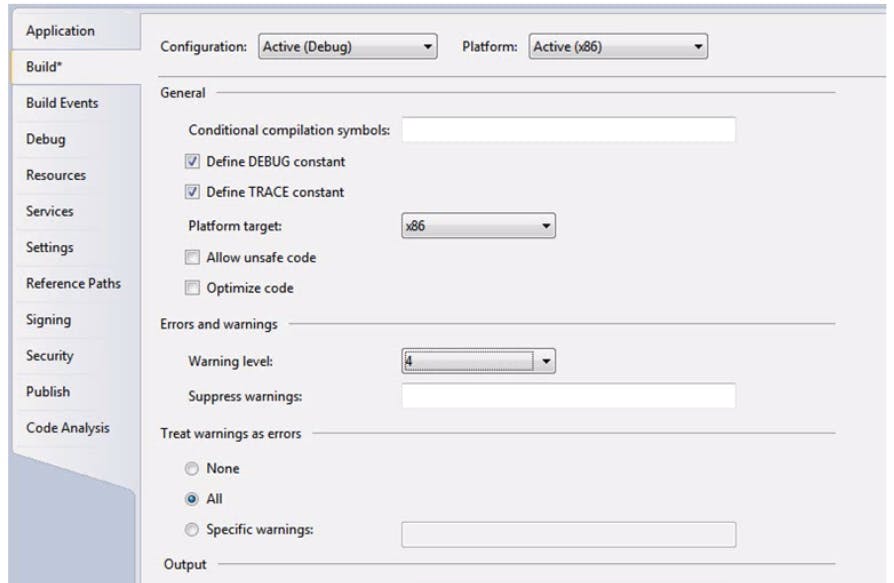
Rule 06: Warnings are Errors

Today's warning is tomorrows error. Developers tend to ignore warnings and sooner or later they turn into errors. It is recommended to enable the setting to treat warnings as errors in visual studio as below
Screenshot 2021-01-12 at 11.24.52 PM.png

Rule 05: Encapsulate complex expressions

if(account.Balance>0 && !account.IsVIP && account.DueDate > CurrentDate)
{
// do something
}

We encounter expressions like above in every day. This is a maintenance nightmare. Instead encapsulate these expressions into account class as below

if(account.IsPastDue)
{
// do something
}

Rule 04: Try to avoid multiple exit points from method

Instead of returning from various if .. else statements, it is recommended to have one entry and one exit point to every method.

Instead of below code

if(account.Balance<5000){
return false;
}
else if(account.IsPastDue)
{
return false;
}
else if(account.IsVip)
{
return false;
}
return true;

use below code

var isValid=true;
if(account.Balance<5000){
isValid =  false;
}
else if(account.IsPastDue)
{
isValid = false;
}
else if(account.IsVip)
{
isValid = false;
}
return isValid;

Above code has only one entry point and one exit point and makes it much more maintainable

Rule 3: Try to avoid comments Comments are mainly used to describe some logic or code. If your code is not self explanatory, refactor and make it meaningful. Comments become stale very quickly and developers tend to forget changing comments whenever they change code. Hence comments not only create maintenance problems but some times can cause confusion if they become stale

Rule 2: Keep methods short If your method is doing too many things, split them. In a general rule of thumb, if the method is having greater than 20 lines of code, it is already too big.

Rule 1: Keep classes short Classes should only do one and only one thing. If you find class doing 2 things, refactor it

➡SQL QUICK REFERENCE  - https://lnkd.in/fGMYivX

➡Python for Data analysis - https://lnkd.in/fvKavA2
➡Python Quick Reference sheet - https://lnkd.in/fa9wirz
➡Python Machine Learning Tutorial - https://lnkd.in/fteKpTY
➡IBM FREE Cognitive classes for Data Science and Machine Learning - https://lnkd.in/fpp9QFT
➡Data Visualization - https://lnkd.in/f3FXCue
➡Getting Your First Data Science Job - https://lnkd.in/fQGHM2J
➡DATA SCIENCE INTERVIEW QUESTIONS - https://lnkd.in/feKZVhv
➡EXCEL EXPERT IN NO TIME - https://lnkd.in/fXC4dhj
➡10 Minutes to Pandas - https://lnkd.in/fpwaBCq
➡Numpy 100 Exercises - https://lnkd.in/fVX7Khk
➡Quick Reference Sheet (ML , DL & AI) - https://lnkd.in/fEVYMGD
➡Machine Learning Yearning By Andrew Ng - https://lnkd.in/f_E-_pf
➡MUST READ ARTICLES FOR DATA SCIENCE ENTHUSIAST - https://lnkd.in/fwPmurj
➡Coursera Deep Learning Course Notes - https://lnkd.in/fwQRK_G
➡Commonly used Machine Learning Algorithms - https://lnkd.in/f8msx2T

 Read More here - https://dzone.com/articles/scrum-guide-2020-beyond-software?edition=642292


How Scrum Changes with the Scrum Guide 2020

Scrum has witnessed many applications beyond its origins of software development over recent years. Being a real framework, Scrum has been augmented by many other practices, techniques, and tools, embracing many of those so tightly that they seem indistinguishable from the framework itself. Or, could you imagine running a Sprint without a Sprint board?

Consequently, the calls for accessibility and inclusion have become louder, and Ken and Jeff managed to answer them compellingly.

My Top Changes Regarding the Scrum Guide 2020

I do believe that everyone interested in Scrum as a framework should take an hour and read the Scrum Guide 2020 or the Scrum Guide 2020 Reordered thoroughly. The call for accessibility and inclusion has been heard, and the proposed changes are plenty and far-reaching.

Foremost, the new Scrum Guide is less prescriptive, eliminating many suggestions such as the Daily Scrum questions, at least one mandatory action item from the Retrospective becoming a part of the Sprint Backlog or the advice on why Sprint cancelations are rare events. The Sprint Review lost its detailed recipe on how to run the event. Also, the obvious is no longer stated: Scrum is indeed not trivial to master.

Interestingly, the authors also axed other elements of the 2017 edition of the Scrum Guide that I thought less contested, for example, the magnitude of work allocated to Product Backlog refinement and servant-leadership.

Here are ten changes in the Scrum Guide 2020—in no particular order—I consider remarkable:

  1. No more roles: “The Scrum Team consists of one Scrum Master, one Product Owner, and Developers. Within a Scrum Team, there are no sub-teams or hierarchies. It is a cohesive unit of professionals focused on one objective at a time, the Product Goal.” (There are no more roles.)
  2. There is no more Development Team: “Developers are the people in the Scrum Team that are committed to creating any aspect of a usable Increment each Sprint.” (I have supported many marketing and PR teams in exploring and using Scrum for their purposes. Not once have I encountered someone who could not understand the concept of the ‘development team member’ and apply it to their situation accordingly. Nevertheless, this simplification is welcome.)
  3. The focus on the Scrum Team: “The Scrum Team is responsible for all product-related activities from stakeholder collaboration, verification, maintenance, operation, experimentation, research and development, and anything else that might be required.” (This holistic approach was overdue; the Scrum team wins, the Scrum team loses—there are no factions within the Scrum Team but shared responsibility to create value for the customers. This strengthened team idea is also reflected in the point that the Scrum Team is now self-managing than (merely) “self-organizing.”)
  4. Servant leadership no longer mentioned: “Scrum Masters are true leaders who serve the Scrum Team and the larger organization.” (I have always considered servant leadership to be integral to Scrum’s success. This change probably positions the Scrum Master role closer to project managers and delivery managers.)
  5. The Product Goal: “The Product Goal describes a future state of the product which can serve as a target for the Scrum Team to plan against. […] The Product Goal is the long-term objective for the Scrum Team.” (I have never encountered a Scrum Team lacking an overarching goal, but probably that is a welcome clarification.)
  6. The Product explanation: “A product is a vehicle to deliver value. It has a clear boundary, known stakeholders, well-defined users or customers. A product could be a service, a physical product, or something more abstract.” (Scrum points beyond software; see above.)
  7. Sprint Reviews are no gates: “The Sprint Review should never be considered a gate to releasing value.” (This is another good pointer at the Scrum Team’s empowerment.)
  8. Increment releases are no longer a prerogative of the Product Owner: “The Sprint Review should never be considered a gate to releasing value. […] If a Product Backlog item does not meet the Definition of Done, it cannot be released or even presented at the Sprint Review.” (As the Scrum Guide 2020 states, the “Scrum Team is responsible for all product-related activities from stakeholder collaboration, verification, maintenance, operation, experimentation, research and development, and anything else that might be required.” This notion includes the decision of what to release when to whom.)
  9. Commitments: “Each artifact contains a commitment to ensure it provides information that enhances transparency and focus against which progress can be measured.” (There is now a home for the Sprint Goal, the Definition of Done—now without quotation marks—, and the previously mentioned Product Goal as all of them are linked to one of the three Scrum artifacts as commitments.)
  10. “Done” now creates a (potentially releasable) Product Increment: “The Definition of Done is a formal description of the state of the Increment when it meets the quality measures required for the product. The moment a Product Backlog item meets the Definition of Done, an Increment is born.” (Another welcome clarification: when work from the Sprint Backlog meets the Scrum Team’s quality standard, it constitutes a releasable Increment.)

As mentioned earlier, there are numerous additional tweaks here and there. To mention a few: The Product Backlog items are no longer estimated but sized, the Scrum Master is no longer removing impediments, but is now “causing the removal of impediments.” Moreover, the “Why is this Sprint valuable?” question has become a part of the Sprint Planning.

Conclusion—The Scrum Guide 2020

.
.

 Read More here - https://dzone.com/articles/scrum-guide-2020-beyond-software?edition=642292


 Read Full Article here - https://www.leadinganswers.com/2020/11/illuminating-the-intangibles-of-agile.html


Agile Iceberg

Organizations fail when they try to switch to an agile way of working by just implementing the visible agile work practices without the invisible supporting components. They fail because they are missing two key elements:

  1. A psychologically safe environment in which to work
  2. Belief in the core agile mindset and values

These factors may sound soft, fuzzy and hard to define, so let’s examine some of the thinking behind them…

​​​1. Psychological Safety
Psychological safety is a subset of emotional intelligence. It is part of working with others and deals with how comfortable we are at interacting, contributing and questioning others at work. In the book The 4 Stages of Psychological Safety, author Timothy Clark outlines a model for understanding psychological safety. As the book title states, it progresses through four stages:

4 Stages of Safety

  1. Inclusion Safety is the basic human need to belong and be accepted by a group. People need to feel safe to be themselves, including any unique or peculiar attributes. Without inclusion safety, people feel excluded from the group.
  2. Learner Safety is the encouragement needed to learn, experiment and grow. It requires us to feel safe when asking questions, getting feedback, trying things out and making a few mistakes along the way. Without learner safety, people will be unwilling to try new approaches.
  3. Contributor Safety is having the autonomy needed to build something valuable and make a difference—the feeling of safety required to contribute something and have it judged by others. Without contributor safety, people will guard their work for too long, waiting for it to be perfect and miss out on early feedback. They will also not feel like they are making a difference.
  4. Challenger Safety is having the permission and “air cover” necessary to challenge the status quo, to question why things are done that way and suggest ways to make something better. Without challenger safety, retrospectives and improvement initiatives will suffer since no one will be willing to speak up and discuss what is wrong.

The concepts of inclusion, encouragement, autonomy and “air cover” associated with the four levels of psychological safety play an essential role in the invisible, under-the-waterline support structure of successful agile teams.

Read Full Article here - https://www.leadinganswers.com/2020/11/illuminating-the-intangibles-of-agile.html

Project managers, product owners, scrum masters and team leads establish this psychological safety by modeling the desired behavior. This is done by admitting their mistakes, asking basic questions and generally “learning out loud” to show they do not have all the answers either—and it is okay and encouraged for people to be open.

2. The Agile Mindset and Values
Agile projects apply a different mindset than traditional, predictive approaches. Predictive projects work from the idea that things can be specified upfront, and the role of the project manager is to break down the work into simpler and simpler steps until they can be handed out to team members. For predictive projects, the mantra “plan the work, work the plan” applies.

Agile projects believe the team is best positioned to co-design and co-create the solution in collaboration with the business. There is no complete upfront design; instead, it emerges through exploration and use. If agile projects had a corresponding mantra, it would contain words such as “incrementally build the highest value solution via collaboration in empowered teams.”

So, predictive projects use design followed by build with centralized coordination, while agile projects use design and build in parallel with distributed coordination.

One approach is not necessarily better than the other. Projects and programs often combine work that suits both systems. The role of the modern project manager involves being fluent in each approach and knowing when and how to implement them.

However, returning to our theme of illuminating some of the agile mindset values, both the mindset and values build on from psychological safety. They include ideas such as:

  • Collaboration – Together we are stronger than we are as individuals.
  • Build and feedback - Some things are not knowable upfront; we learn through building and soliciting feedback.
  • Value-driven – Take an economic view of decision making and aim to optimize business value.
  • Welcoming change and responding to it – Understand that we will learn as we go—and this will require ongoing change.
  • Continuous delivery – Deliver through small value-add slices. Frequently check priorities and reprioritize if advantageous.

In the book Collaboration Explained, author Jean Tabaka explains that collaborative teams have the following properties:

  1. Self-organizing - The team is self-organizing vs. command-and-control top-down organizations.
  2. Empowered to make decisions - The team is empowered to discuss, evaluate and make decisions vs. being dictated to by an outside authority.
  3. Belief in vision and success - Team members understand the project vision and goals, and truly believe that, as a team, they can solve any problem to achieve them.
  4. Committed team - Team members are committed to succeed as a team vs. individual success at any cost.
  5. Trust each other - The team has the confidence to continually work in improving their ability to act without fear, anger or bullying.
  6. Participatory decision making - The team is engaged in participatory decision making vs. bending to authoritarian decision making or succumbing to decisions from others.
  7. Consensus-driven - Decisions are consensus-driven vs. leader-driven. Team members share their opinions freely and participate in the final decision.
  8. Constructive disagreement - The team is able to negotiate through a variety of alternatives and impacts surrounding a decision, and craft the one that provides the best outcome.

These characteristics can be evaluated at a retrospective through anonymous surveys. The image below shows data gathered from six team members on a range of 1-5 on each of the eight collaboration factors:

Team Review

We can use tools such as this—and an understanding of psychological safety—to determine if we have the requisite elements in place for an agile approach to be successful.

Agile adoption can be hindered by the sometimes-foreign language used in agile approaches. Yet ideas from Scrum and XP (such as transparency and courage) are just instances of psychological safety that we can trace to “working with others” in emotional intelligence.

Likewise, collaboration—the secret sauce of effective agile teams—can be tracked to buy-in for specific attributes. These include being self-organizing, being empowered to make decisions, having a belief in the vision, being consensus-driven, trusting each other and having constructive disagreements. No easy feat, but not mystical or unobtainable, either.

Summary

 Read More here - https://www.leadinganswers.com/2020/11/illuminating-the-intangibles-of-agile.html

Newer Posts
Older Posts

Total Posts

Search this Site

Connect with Me

Translate Articles

Total Pageviews


Contributors

My photo
Jayavel Chakravarthy Srinivasan
Professional:I'm a Software Techie, Specialized in Microsoft technologies. Worked in CMM Level 5 organizations like EPAM, KPMG, Bosch, Honeywell, ValueLabs, Capgemini and HCL. I have done freelancing. My interests are Software Development, Graphics design and Photography.
Certifications:I hold PMP, SAFe 6, CSPO, CSM, Six Sigma Green Belt, Microsoft and CCNA Certifications.
Academic:All my schooling life was spent in Coimbatore and I have good friends for life. I completed my post graduate in computers(MCA). Plus a lot of self learning, inspirations and perspiration are the ingredients of the person what i am now.
Personal Life:I am a simple person and proud son of Coimbatore. I studied and grew up there. My mom and wife are proud home-makers and greatest cook on earth. My kiddo in her junior school.
Finally:I am a film buff and like to travel a lot. I visited 3 countries - United States of America, Norway and United Kingdom. I believe in honesty after learning a lot of lessons the hard way around. I love to read books & articles, Definitely not journals. :)
View my complete profile

My Achievements

My Achievements

My Favorite Links

  • Saran & Akshu Links
  • Saran Kitchen Hut
  • World of Akshu
  • Ashok Raja Blog

Subscribe To

Posts
Atom
Posts
All Comments
Atom
All Comments

Contact Form

Name

Email *

Message *

Blog Archive

  • ▼  2026 (37)
    • ▼  October (1)
      • Reliable Response Design Tips for User’s question ...
    • ►  September (2)
    • ►  July (1)
    • ►  June (6)
    • ►  May (7)
    • ►  April (7)
    • ►  March (7)
    • ►  February (5)
    • ►  January (1)
  • ►  2025 (65)
    • ►  December (4)
    • ►  November (3)
    • ►  October (3)
    • ►  August (1)
    • ►  July (6)
    • ►  June (7)
    • ►  May (26)
    • ►  April (1)
    • ►  March (3)
    • ►  February (1)
    • ►  January (10)
  • ►  2024 (134)
    • ►  December (3)
    • ►  November (8)
    • ►  October (11)
    • ►  September (2)
    • ►  August (1)
    • ►  July (39)
    • ►  June (8)
    • ►  May (4)
    • ►  April (9)
    • ►  March (6)
    • ►  February (33)
    • ►  January (10)
  • ►  2023 (16)
    • ►  December (12)
    • ►  August (2)
    • ►  March (1)
    • ►  January (1)
  • ►  2022 (14)
    • ►  December (1)
    • ►  August (6)
    • ►  July (3)
    • ►  June (2)
    • ►  February (1)
    • ►  January (1)
  • ►  2021 (16)
    • ►  December (1)
    • ►  November (2)
    • ►  October (2)
    • ►  August (1)
    • ►  July (2)
    • ►  June (2)
    • ►  May (2)
    • ►  March (2)
    • ►  February (1)
    • ►  January (1)
  • ►  2020 (36)
    • ►  December (1)
    • ►  November (15)
    • ►  October (2)
    • ►  September (1)
    • ►  July (1)
    • ►  June (2)
    • ►  May (4)
    • ►  March (2)
    • ►  February (6)
    • ►  January (2)
  • ►  2019 (14)
    • ►  December (3)
    • ►  November (1)
    • ►  September (2)
    • ►  August (1)
    • ►  June (1)
    • ►  May (3)
    • ►  March (2)
    • ►  January (1)
  • ►  2018 (61)
    • ►  November (3)
    • ►  October (4)
    • ►  September (4)
    • ►  August (5)
    • ►  July (4)
    • ►  June (4)
    • ►  May (7)
    • ►  April (7)
    • ►  March (5)
    • ►  February (1)
    • ►  January (17)
  • ►  2017 (55)
    • ►  December (1)
    • ►  November (7)
    • ►  October (7)
    • ►  September (8)
    • ►  July (4)
    • ►  June (7)
    • ►  May (4)
    • ►  April (4)
    • ►  March (1)
    • ►  February (2)
    • ►  January (10)
  • ►  2016 (45)
    • ►  December (1)
    • ►  November (5)
    • ►  October (2)
    • ►  September (7)
    • ►  August (3)
    • ►  July (3)
    • ►  June (1)
    • ►  May (3)
    • ►  April (5)
    • ►  March (3)
    • ►  February (3)
    • ►  January (9)
  • ►  2015 (88)
    • ►  December (5)
    • ►  November (2)
    • ►  October (6)
    • ►  September (6)
    • ►  August (3)
    • ►  July (6)
    • ►  June (7)
    • ►  May (12)
    • ►  April (6)
    • ►  March (11)
    • ►  February (10)
    • ►  January (14)
  • ►  2014 (159)
    • ►  December (16)
    • ►  November (13)
    • ►  October (42)
    • ►  September (12)
    • ►  August (19)
    • ►  July (3)
    • ►  June (17)
    • ►  May (10)
    • ►  April (12)
    • ►  March (7)
    • ►  February (4)
    • ►  January (4)
  • ►  2013 (192)
    • ►  December (7)
    • ►  November (2)
    • ►  October (3)
    • ►  September (10)
    • ►  August (25)
    • ►  July (17)
    • ►  June (22)
    • ►  May (22)
    • ►  April (24)
    • ►  March (17)
    • ►  February (22)
    • ►  January (21)
  • ►  2012 (204)
    • ►  December (21)
    • ►  November (35)
    • ►  October (47)
    • ►  September (27)
    • ►  August (6)
    • ►  July (21)
    • ►  June (16)
    • ►  May (7)
    • ►  April (9)
    • ►  March (4)
    • ►  February (3)
    • ►  January (8)
  • ►  2011 (70)
    • ►  December (8)
    • ►  November (5)
    • ►  October (3)
    • ►  September (2)
    • ►  August (7)
    • ►  July (3)
    • ►  June (30)
    • ►  May (3)
    • ►  April (3)
    • ►  March (1)
    • ►  February (3)
    • ►  January (2)
  • ►  2010 (30)
    • ►  December (1)
    • ►  September (4)
    • ►  August (1)
    • ►  July (1)
    • ►  June (1)
    • ►  May (4)
    • ►  April (6)
    • ►  March (5)
    • ►  February (2)
    • ►  January (5)
  • ►  2009 (40)
    • ►  December (4)
    • ►  November (6)
    • ►  October (4)
    • ►  September (5)
    • ►  August (4)
    • ►  July (3)
    • ►  June (4)
    • ►  May (8)
    • ►  March (1)
    • ►  February (1)
  • ►  2008 (6)
    • ►  December (1)
    • ►  September (1)
    • ►  May (1)
    • ►  April (2)
    • ►  February (1)
  • ►  2007 (7)
    • ►  December (1)
    • ►  November (2)
    • ►  October (1)
    • ►  July (1)
    • ►  May (2)

Recent Posts

Followers

Report Abuse

FOLLOW ME @INSTAGRAM

Popular Posts

  • Stay Wow - Health Tips from Sapna Vyas Patel
    Referred URL https://www.facebook.com/sapnavyaspatel WATCH WEIGHT LOSS VIDEO: http://www.youtube.com/ watch?v=S_dlkjwVItA ...
  • Calorie Count chart For food and drinks
    Referred URL http://deepthidigvijay.blogspot.co.uk/p/health-diet-calorie-charts.html http://www.nidokidos.org/threads/37834-Food-Calorie-...
  • SharePoint 2010 Interview Questions and Answers
    Referred URL http://www.enjoysharepoint.com/Articles/Details/sharepoint-2010-interview-questions-and-answers-148.aspx 1.What is SharePoint...
  • 150 Best Windows Applications Of Year 2010
    Referred URL : http://www.addictivetips.com/windows-tips/150-best-windows-applications-of-year-2010-editors-pick/?utm_source=feedburner...
  • Web Developer Checklist by Mads Kristensen
    Referred Link -  http://webdevchecklist.com/ Web Developer Checklist Get the extension  Chrome  |  Firefox  |  Edge Menu Bes...
  • WCF and REST Interview Questions
    What is WPF? The Windows Presentation Foundation (WPF) is a next generation graphics platform that is part of...
  • Remove double tap to unlock feature on samsung galaxy core2
    Double tap to unlock is a feature of Talkback, so if your will disable Talkback, double tap to unlock will also be disabled. To disable doub...
  • Difference Between Content Editor and Script Editor webpart
    Referred Link -  http://jeffas.com/content-editor-vs-script-editor-webpart/ Content editor web part is a place holder for creating rich ...
  • SPFolder related operations in SharePoint
      1) Get SPListItem(s) of a particular SPFolder SPList splist; SPFolder spfolder; //Get the required folder instance SPQuery spquery = new ...

Comments

Created with by BeautyTemplates | Distributed by blogger templates