Powered by Blogger.
🌏World roaming Software Technology Evangelist. Proud Indian, Bought up from Coimbatore, Tamilnadu, INDIA. Pointing towards share of Knowledge. 😎
  • Programming ▼
    • DotNet
      • C# Coding Standards
    • Cloud
    • Microsoft 365/ SharePoint
    • SQL
    • Angular / ReactJS / NodeJS
    • Salesforce
    • Magento
    • Python
    • Mobile App Development
    • Database
    • DevOps
    • Automation Testing
    • User Experience
  • Learning ▼
    • Roadmap
    • Trainings
    • E-Books
    • Quick References
    • Certifications
    • Self Improvement
    • Productivity
    • TED Talks
    • Kids Programming
  • SW Engineering ▼
    • Agile
    • Software Design
    • Architecture Samples
    • Best Practises
    • Technologies and Tools
    • Open Sources
    • Free Softwares
  • Leadership ▼
    • Program Management
    • Product Management
    • Project Management
    • People Management
  • Job Search ▼
    • Interview Tips
    • Career Handbook
    • Resume Templates
    • Sample Profiles
    • Cover Letter Samples
    • HR Interview Questions
    • Job Websites List
    • Coding Site Links
    • TedEx Talks
    • International Jobs
  • Emerging ▼
    • Innovation
    • Machine Learning
    • Artificial Intelligence
    • Generative AI
    • AI Tools
    • Big Data
    • Data Science
    • Data Analytics & Visualization
    • Cyber Security
    • Microsoft Azure
    • Amazon Web Services
    • Cryptography
    • ChatBots
    • Internet of Things (IoT)
    • Mixed Reality /AR/VR
  • Misc. ▼
    • Travel
    • Photography
    • Health Tips
    • Medical Tips
    • Home Designs
    • Gardening
  • Samples ▼
    • GitHub
    • Executive Dashboard
    • Chatbot
    • Image Generator
    • Jay's Link Tree
  • Favourites▼
    • Saran Kitchen Hut
    • World of Akshu
    • Saran & Akshu - Other Links
Link - http://www.hanselman.com/blog/WhatNETDevelopersOughtToKnowToStartIn2017.aspx
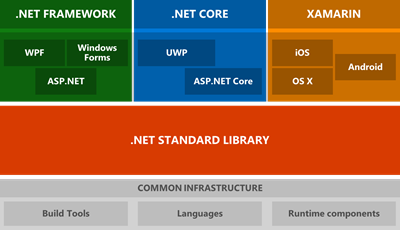
.NET Components

Many many years ago I wrote a blog post about what .NET Developers ought to know. Unfortunately
what was just a list of questions was abused by recruiters and others who used it as a harsh litmus test.
There's a lot going on in the .NET space so I thought it would be nice to update with a gentler list that could
be used as a study guide and glossary. Jon Galloway and I sat down and put together this list of terms
and resources.
Your first reaction might be "wow that's a lot of stuff, .NET sucks!" Most platforms have similar glossaries
or barriers to entry. There's TLAs (three letter acronyms) in every language and computer ecosystems.
Don't get overwhelmed, start with Need To Know and move slowly forward. Also, remember YOU decide
when you want to draw the line. You don't need to know everything. Just know that every layer and label
has something underneath it and the whatever program you're dealing with may be in a level you have
yet to dig into.
Draw a line under the stuff you need to know. Know that, and know you can look the other stuff up.  Some
of us want the details – the internals. Others don't. You may learn from the Metal Up or from the Glass Back.
Know your style, and revel in it.
First, you can start learning .NET and C# online at https://dot.net. You can learn F# online here http://www.tryfsharp.org. Both sites let you write code without downloading anything. You just work in your browser.
When you're ready, get .NET Core and Visual Studio Code at https://dot.net and start reading! 

NEED TO KNOW

  • What's .NET? .NET has some number of key components. We'll start with runtimes and languages.
  • Here are the three main runtimes:
    • .NET Framework - The .NET framework helps you create mobile, desktop, and web applications that run on Windows PCs, devices and servers.
    • .NET Core - .NET Core gives you a fast and modular platform for creating server applications that run on Windows, Linux and Mac.
    • Mono for Xamarin - Xamarin brings .NET to iOS and Android, reusing skills and code while getting access to the native APIs and performance. Mono is an open source .NET that was created before Xamarin and Microsoft joined together. Mono will support the .NET Standard as another great .NET runtime that is open source and flexible. You'll also find Mono in the Unity game development environment.
  • Here are the main languages:
    • C# is simple, powerful, type-safe, and object-oriented while retaining the expressiveness and elegance of C-style languages. Anyone familiar with C and similar languages will find few problems in adapting to C#. Check out the C# Guide to learn more about C# or try it in your browser at https://dot.net
    • F# is a cross-platform, functional-first programming language that also supports traditional object-oriented and imperative programming. Check out the F# Guide to learn more about F# or try it in your browser at http://www.tryfsharp.org 
    • Visual Basic is an easy language to learn that you can use to build a variety of applications that run on .NET. I started with VB many years ago.
  • Where do I start?
    • https://dot.net is where to download .NET Core and Visual Studio Code
    • https://docs.microsoft.com is where the documentation is
    • https://github.com/dotnet is where the open source code starts
  • After runtimes and languages, there's platforms and frameworks.
    • Frameworks define the APIs you can use. There's the .NET 4.6 Framework, the .NET Standard, etc. Sometimes you'll refer to them by name, or in code and configuration files as a TFM (see below)
    • Platform (in the context of .NET) - Windows, Linux, Mac, Android, iOS, etc. This also includes Bitness, so x86 Windows is not x64 Windows. Each Linux distro is its own platform today as well.
  • TFMs (Target Framework Moniker) - A moniker (string) that lets you refer to target framework + version combinations. For example, net462 (.NET 4.6.2), net35 (.NET 3.5), uap (Universal Windows Platform). For more information, see this blog post. Choosing a TFM decides which APIs are available to you, and which frameworks your code can run on.
  • NuGet - NuGet is the package manager for the Microsoft development platform including .NET. The NuGet client tools provide the ability to produce and consume packages. The NuGet Gallery is the central package repository used by all package authors and consumers.
  • What's an Assembly? - An assembly is typically a DLL or EXE containing compiled code. Assemblies are the building blocks of .NET Full Framework applications; they form the fundamental unit of deployment, version control, reuse, activation scoping, and security permissions. In .NET Core, the building blocks are NuGet packages that contain assemblies PLUS additional metadata
  • .NET Standard or "netstandard" - The .NET Standard simplifies references between binary-compatible frameworks, allowing a single target framework to reference a combination of others. The .NET Standard Library is a formal specification of .NET APIs that are intended to be available on all .NET runtimes.
  • .NET Framework vs. .NET Core: The .NET Framework is for Windows apps and Windows systems, while the .NET Core is a smaller cross platform framework for server apps, console apps, web applications, and as a core runtime to build other systems from.

SHOULD KNOW

    • CLR – The Common Language Runtime (CLR), the virtual machine component of Microsoft's .NET framework, manages the execution of .NET programs. A process known as just-in-time compilation converts compiled code into machine instructions which the computer's CPU then executes.
    • CoreCLR - .NET runtime, used by .NET Core.
    • Mono - .NET runtime, used by Xamarin and others.
    • CoreFX - .NET class libraries, used by .NET Core and to a degree by Mono via source sharing.
    • Roslyn - C# and Visual Basic compilers, used by most .NET platforms and tools. Exposes APIs for reading, writing and analyzing source code.
    • GC - .NET uses garbage collection to provide automatic memory management for programs. The GC operates on a lazy approach to memory management, preferring application throughput to the immediate collection of memory. To learn more about the .NET GC, check out Fundamentals of garbage collection (GC).
    • "Managed Code" - Managed code is just that: code whose execution is managed by a runtime like the CLR.
    • IL – Intermediate Language is the product of compilation of code written in high-level .NET languages. C# is Apples, IL is Apple Sauce, and the JIT and CLR makes Apple Juice. ;)
    • JIT – Just in Time Compiler. Takes IL and compiles it in preparation for running as native code.
    • Where is  .NET on disk? .NET Framework is at C:\Windows\Microsoft.NET and .NET Core is at C:\Program Files\dotnet. On Mac it usually ends up in /usr/local/share. Also .NET Core can also be bundled with an application and live under that application's directory as a self-contained application.
    • Shared Framework vs. Self Contained Apps - .NET Core can use a shared framework (shared by multiple apps on the same machine) or your app can be self-contained with its own copy. Sometimes you'll hear "xcopy-deployable / bin-deployable" which implies that the application is totally self-contained.
    • async and await– The async and await keywords generate IL that will free up a thread for long running (awaited) function calls (e.g. database queries or web service calls). This frees up system resources, so you aren't hogging memory, threads, etc. while you're waiting.
    • Portable Class Libraries -  These are "lowest common denominator" libraries that allow code sharing across platforms. Although PCLs are supported, package authors should support netstandard instead. The .NET Platform Standard is an evolution of PCLs and represents binary portability across platforms.
    • .NET Core is composed of the following parts:
      • A .NET runtime, which provides a type system, assembly loading, a garbage collector, native interop and other basic services.
      • A set of framework libraries, which provide primitive data types, app composition types and fundamental utilities.
      • A set of SDK tools and language compilers that enable the base developer experience, available in the .NET Core SDK.
      • The 'dotnet' app host, which is used to launch .NET Core apps. It selects the runtime and hosts the runtime, provides an assembly loading policy and launches the app. The same host is also used to launch SDK tools in much the same way.

    NICE TO KNOW

      • GAC – The Global Assembly Cache is where the .NET full Framework on Windows stores shared libraries. You can list it out with "gacutil /l"  
      • Assembly Loading and Binding - In complex apps you can get into interesting scenarios around how Assemblies are loaded from disk
      • Profiling (memory usage, GC, etc.) - There's a lot of great tools you can use to measure – or profile – your C# and .NET Code. A lot of these tools are built into Visual Studio.
      • LINQ - Language Integrated Query is a higher order way to query objects and databases in a declarative way
      • Common Type System and Common Language Specification define how objects are used and passed around in a way that makes them work everywhere .NET works, interoperable. The CLS is a subset that the CTS builds on.
      • .NET Native - One day you'll be able to compile to native code rather than compiling to Intermediate Language.
      • .NET Roadmap - Here's what Microsoft is planning for .NET for 2017
      • "Modern" C# 7 – C# itself has new features every year or so. The latest version is C# 7 and has lots of cool features worth looking at.
      • Reactive Extensions - "The Reactive Extensions (Rx) is a library for composing asynchronous and event-based programs using observable sequences and LINQ-style query operators." You can create sophisticated event-based programs that work cleanly and asynchronously by applying LINQ-style operators to data streams.
      Link - https://hbr.org/2016/12/4-ways-to-improve-your-strategic-thinking-skills

      dec16-23-78723761-vert

      If you’ve ever received feedback that you “need to be more strategic,” you know how frustrating it can feel. To add insult to injury, the feedback rarely comes with any concrete guidance on what to do about it. One of my coaching clients, Lisa, a vice president of HR, was in this situation and explains, “I was just told to think bigger picture and to be more strategic. It felt like I had been given the definition of a word by using the same word. It just wasn’t helpful.”
      So what specific steps can you take to be more strategic in your current role?
      Start by changing your mindset. If you believe that strategic thinking is only for senior executives, think again. It can, and must, happen at every level of the organization; it’s one of those unwritten parts of all job descriptions. Ignore this fact and you risk getting passed over for a promotion, or having your budget cut because your department’s strategic contribution is unclear.
      Once you’ve accepted that it’s part of your job, focus on developing four key abilities that demonstrate your strategic prowess.

      Know: Observe and Seek Trends

      Lisa wasn’t seeing the big picture. Because of the amount of work she had and the pace at which she needed to get it done, she often took a “heads down” approach to her job and failed to “lift up” and observe both internal and external trends. She was missing key information that could help her focus, prioritize, and be proactive in addressing talent issues for her fast-growing company. Because Lisa approached her job in a transactional manner, simply getting the next hire, she didn’t recognize that she needed a completely new approach to recruitment and retention.
      In order to be strategic, you need a solid understanding of the industry context, trends, and business drivers. An intellectual appreciation of the importance of bringing in current data and seeking trends isn’t enough. You also have to:
      • Make it a routine exercise to explore and synthesize the internal trends in your day-to-day work. For example, pay attention to the issues that get raised over and over in your organization and synthesize the common obstacles your colleagues face.
      • Be proactive about connecting with peers both in your organization and in your industry to understand their observations of the marketplace. Then, share your findings across your network.
      • Understand the unique information and perspective that your function provides and define its impact on the corporate level strategy.

      Think: Ask the Tough Questions

      With a fresh understanding of trends and issues, you can practice using strategic thinking by asking yourself, “How do I broaden what I consider?” Questions are the language of strategy. Lisa came to appreciate that her life and prior experience gave her a unique, yet myopic, strategic lens. So she pushed herself to ramp up her perspective-taking and inquiry skills. By becoming more curious, and looking at information from different points of view, she was able to reduce her myopia and see different possibilities, different approaches, and different potential outcomes.
      For example, when working on an employee retention project she asked herself, “What does success look like in Year 1?”  “What does it look like in Year 3?” “What could impact the outcome in a negative way?” “What are the early signs of success/failure?” “What do business partners need to understand to ensure its success?” and “Do the outcomes support the broader goals of the organization?” By asking these tough questions first, she recognized that she could better engage with colleagues and senior executives early on in ways that would benefit the project — and would help shape the perception that she was thoughtful and strategic.

      Speak: Sound Strategic

      Strategic thinkers also know how to speak the language. They prioritize and sequence their thoughts. They structure their verbal and written communication in a way that helps their audience focus on their core message. They challenge the status quo and get people talking about underlying assumptions. Those that are really skilled walk people through the process of identifying issues, shaping common understanding, and framing strategic choices.
      If this sounds complex, that’s because it is. But there are ways you can start honing these skills:
      • Add more structure to your written and verbal communication. Group and logically order your main points, and keep things as succinct as possible.
      • Prime your audience by giving them a heads up on the overarching topics you want to address so they are prepared to engage in a higher level conversation, not just the tactical details.
      • Practice giving the answer first, instead of building up to your main point.
      Lisa didn’t realize that the way she spoke created the perception that she was not strategic. She set about changing that. First by focusing her one-on-ones with her CHRO on higher level discussions and leaving tactical issues to email. She chose one or two strategic areas to focus on.  and made sure to frame issues in the context of the CHRO’s and the CEO’s top priorities.

      Act: Make Time for Thinking and Embrace Conflict

      In the early phase of our work together, Lisa kept a jam-packed schedule, running from meeting to meeting. She found it difficult to contribute strategically without the time to reflect on the issues and to ponder options. Recognizing that she was not bringing her full value to the table, she started to evaluate her tasks based on urgency and importance as outlined in Stephen Covey’s 2 x 2 matrix. She stopped going to meetings she didn’t need to be at. She blocked out thinking time on her calendar and honored it, just as she would for other meetings. And she fought back the initial guilt of “Am I doing real work when I’m just sitting at my desk thinking?”
      Lisa also practiced other key skills. She learned to embrace debate and to invite challenge, without letting it get personal so that she could ask tough questions. To do this, she focused on issues, not people, and used neutral peers to challenge her thinking. To manage the inevitable ambiguity that arises when you ask more questions, Lisa also learned to clarify her decision-making criteria, allowing her to better act in the face of imperfect information.
      The quest to build your strategic skills can be uncomfortable. At first, you might feel like you’re kicking up sand in the ocean. Your vision will be blurred as you manage through the unsettling feelings that come with challenging your own assumptions and gaining comfort with conflict and curiosity. Once the dust settles, however, and you’re able to contribute at a higher level, you’ll be glad you took the risk.
      Referred Link - https://www.linkedin.com/pulse/how-come-up-side-project-ideas-ryan-hoover


      The email got me thinking of places to look inspiration. Here are a few ways to come up with side project ideas:
      1. Reflect on your day-to-day. Often the best ideas come from one’s own experiences. Write a detailed diary of everything you do in a typical day and identifies things that could be improved. It could be something important (e.g. what tasks to prioritize in your day) or relatively small (e.g. deciding whether to bike or take an Uber to work).
      2. Ask your friends. Run through the same exercise above with your friends. Try to find frustrations or pain points that could be eliminated.
      3. Explore emerging platforms. I used to work in video games as Facebook’s games platform (and cow clicking) was on the rise. I would comb through Facebook’s API and developer docs to identify new, creative ways to built within their platform. As platforms emerge and evolve, new opportunities arise. Today I might explore Google Home, Alexa, or Facebook Messenger.
      4. Browse Product Hunt. Ok, I’m a little biased with this suggestion but great ideas are often built off each other. Products created today will inspire the next Snapchat, directly and indirectly. Also check out Kickstarter and Show HN.
      5. Explore GitHub. Even if you’re not a programmer, GitHub can be a great source for inspiration. Browse trending repo’s for new ideas or projects to join.
      6. Turn a feature into a standalone product. Look at some of your favorite apps, sites, or products. Can you repurpose and improve upon one of its features as a standalone product? For example, Medium has created an elegant way to share and present comments inline. Perhaps others would like to add this functionality to their site. Note: This side project already exists. 😊
      7. Go to a hackathon. While an obvious suggestion, this list wouldn’t be sufficient if excluded. Hackathons are designed for side projects; a motivating place to share ideas with other enthusiastic makers.
      8. Read the internet. It’s difficult to manufacture a truly great idea in a whiteboarding session. Sometimes they’re serendipitous, triggered by stories and changes in the world. Read the news and blog posts to increase the chances of discovering new ideas.

      Recently Our SharePoint 2013 site started behaving in a wired manner.

      Following behaviours we observed.

      • Site links Broken are broken and not able to hit with Site name, Instead we are forced to use the page names (Ex: http://testsite/ds  instead http://testsite/ds/sitepages/home.aspx)
      • Site assets like Images, CSS files not able to load, Even though they are available. 
      • Master pages reference broken. 


      Solution
      The simple way to fix this is to run the 'SharePoint Configuration Wizard' again, Available in Start menu. 

      This wizard will fix all the issues. 

      Referred Link - https://www.linkedin.com/pulse/10-tips-happy-productive-day-alexis-nicole-berdine


      Follow these easy steps to improve your day!

      Your alarm is going off for the sixth time, so you jump out of bed and hurry to throw on the closest T-shirt and jeans that you can find. You already know that today is going to be a rough one.
      But not every day has to feel so rushed and difficult. Set your alarm for 15 minutes earlier than usual and follow these simple tips to create a day that is happier and more productive. 
      You'll thank me in the morning. 

      Give Thanks. 

      As soon as you wake up just lie there and take a moment to think of the things that you are grateful for. 

      Stretch. 

      Before you get out of bed just give your body a moment to relax and wake up by stretching.

      Make Your Bed. 

      It can be easy to run out the door with your sheets still in a mess but by making your bed you can change the whole look and vibe of your room to a more put-together feel.

      Workout. 

      Get a quick workout in by doing a few jumping jacks, crunches or squats if you don't have time to head to the gym. Working out in the morning is the best time to get your blood flowing and boost your metabolism for the rest of your day.

      Look Good Feel Good. 

      Throw on one of your favorite outfits, or curl your hair because when you look good, you feel good! 

      Eat A Light Breakfast. 

      Grab a yogurt, protein shake, granola bar or avocado toast to fuel your day. By eating something light in the morning you won't be bloated for the rest of the day and you will have the energy needed to tackle whatever comes your way.

      Take Your Vitamins. 

      Balance your body out by taking a multivitamin early on in your day. 

      Listen To Upbeat Music. 

      Plus in your headphones on your walk to class or work, or turn up the stereo on your drive. By listening to positive, upbeat music you can start your day with an optimistic vibe.

      Drink Lots Of Water. 

      From the time you wake up until you fall asleep be sure drink water throughout your day. This will keep you from getting headaches and will help to keep your skin clear and glowing!

      Make A List. 

      Plan out what you need and hope to accomplish during your day by writing it down in a planner or on a note pad. You will feel good as you cross each task off and this will keep you motivated to keep accomplishing more. 
      Newer Posts
      Older Posts

      Total Posts

      Search this Site

      Connect with Me

      Translate Articles

      Total Pageviews


      Contributors

      My photo
      Jayavel Chakravarthy Srinivasan
      Professional:I'm a Software Techie, Specialized in Microsoft technologies. Worked in CMM Level 5 organizations like EPAM, KPMG, Bosch, Honeywell, ValueLabs, Capgemini and HCL. I have done freelancing. My interests are Software Development, Graphics design and Photography.
      Certifications:I hold PMP, SAFe 6, CSPO, CSM, Six Sigma Green Belt, Microsoft and CCNA Certifications.
      Academic:All my schooling life was spent in Coimbatore and I have good friends for life. I completed my post graduate in computers(MCA). Plus a lot of self learning, inspirations and perspiration are the ingredients of the person what i am now.
      Personal Life:I am a simple person and proud son of Coimbatore. I studied and grew up there. My mom and wife are proud home-makers and greatest cook on earth. My kiddo in her junior school.
      Finally:I am a film buff and like to travel a lot. I visited 3 countries - United States of America, Norway and United Kingdom. I believe in honesty after learning a lot of lessons the hard way around. I love to read books & articles, Definitely not journals. :)
      View my complete profile

      My Achievements

      My Achievements

      My Favorite Links

      • Saran & Akshu Links
      • Saran Kitchen Hut
      • World of Akshu
      • Ashok Raja Blog

      Subscribe To

      Posts
      Atom
      Posts
      All Comments
      Atom
      All Comments

      Contact Form

      Name

      Email *

      Message *

      Blog Archive

      • ▼  2026 (36)
        • ▼  September (2)
          • Introduction to Muse – Meta's Personal AI Agent
          • Threat Modelling - Best Practices to Design Secure...
        • ►  July (1)
        • ►  June (6)
        • ►  May (7)
        • ►  April (7)
        • ►  March (7)
        • ►  February (5)
        • ►  January (1)
      • ►  2025 (65)
        • ►  December (4)
        • ►  November (3)
        • ►  October (3)
        • ►  August (1)
        • ►  July (6)
        • ►  June (7)
        • ►  May (26)
        • ►  April (1)
        • ►  March (3)
        • ►  February (1)
        • ►  January (10)
      • ►  2024 (134)
        • ►  December (3)
        • ►  November (8)
        • ►  October (11)
        • ►  September (2)
        • ►  August (1)
        • ►  July (39)
        • ►  June (8)
        • ►  May (4)
        • ►  April (9)
        • ►  March (6)
        • ►  February (33)
        • ►  January (10)
      • ►  2023 (16)
        • ►  December (12)
        • ►  August (2)
        • ►  March (1)
        • ►  January (1)
      • ►  2022 (14)
        • ►  December (1)
        • ►  August (6)
        • ►  July (3)
        • ►  June (2)
        • ►  February (1)
        • ►  January (1)
      • ►  2021 (16)
        • ►  December (1)
        • ►  November (2)
        • ►  October (2)
        • ►  August (1)
        • ►  July (2)
        • ►  June (2)
        • ►  May (2)
        • ►  March (2)
        • ►  February (1)
        • ►  January (1)
      • ►  2020 (36)
        • ►  December (1)
        • ►  November (15)
        • ►  October (2)
        • ►  September (1)
        • ►  July (1)
        • ►  June (2)
        • ►  May (4)
        • ►  March (2)
        • ►  February (6)
        • ►  January (2)
      • ►  2019 (14)
        • ►  December (3)
        • ►  November (1)
        • ►  September (2)
        • ►  August (1)
        • ►  June (1)
        • ►  May (3)
        • ►  March (2)
        • ►  January (1)
      • ►  2018 (61)
        • ►  November (3)
        • ►  October (4)
        • ►  September (4)
        • ►  August (5)
        • ►  July (4)
        • ►  June (4)
        • ►  May (7)
        • ►  April (7)
        • ►  March (5)
        • ►  February (1)
        • ►  January (17)
      • ►  2017 (55)
        • ►  December (1)
        • ►  November (7)
        • ►  October (7)
        • ►  September (8)
        • ►  July (4)
        • ►  June (7)
        • ►  May (4)
        • ►  April (4)
        • ►  March (1)
        • ►  February (2)
        • ►  January (10)
      • ►  2016 (45)
        • ►  December (1)
        • ►  November (5)
        • ►  October (2)
        • ►  September (7)
        • ►  August (3)
        • ►  July (3)
        • ►  June (1)
        • ►  May (3)
        • ►  April (5)
        • ►  March (3)
        • ►  February (3)
        • ►  January (9)
      • ►  2015 (88)
        • ►  December (5)
        • ►  November (2)
        • ►  October (6)
        • ►  September (6)
        • ►  August (3)
        • ►  July (6)
        • ►  June (7)
        • ►  May (12)
        • ►  April (6)
        • ►  March (11)
        • ►  February (10)
        • ►  January (14)
      • ►  2014 (159)
        • ►  December (16)
        • ►  November (13)
        • ►  October (42)
        • ►  September (12)
        • ►  August (19)
        • ►  July (3)
        • ►  June (17)
        • ►  May (10)
        • ►  April (12)
        • ►  March (7)
        • ►  February (4)
        • ►  January (4)
      • ►  2013 (192)
        • ►  December (7)
        • ►  November (2)
        • ►  October (3)
        • ►  September (10)
        • ►  August (25)
        • ►  July (17)
        • ►  June (22)
        • ►  May (22)
        • ►  April (24)
        • ►  March (17)
        • ►  February (22)
        • ►  January (21)
      • ►  2012 (204)
        • ►  December (21)
        • ►  November (35)
        • ►  October (47)
        • ►  September (27)
        • ►  August (6)
        • ►  July (21)
        • ►  June (16)
        • ►  May (7)
        • ►  April (9)
        • ►  March (4)
        • ►  February (3)
        • ►  January (8)
      • ►  2011 (70)
        • ►  December (8)
        • ►  November (5)
        • ►  October (3)
        • ►  September (2)
        • ►  August (7)
        • ►  July (3)
        • ►  June (30)
        • ►  May (3)
        • ►  April (3)
        • ►  March (1)
        • ►  February (3)
        • ►  January (2)
      • ►  2010 (30)
        • ►  December (1)
        • ►  September (4)
        • ►  August (1)
        • ►  July (1)
        • ►  June (1)
        • ►  May (4)
        • ►  April (6)
        • ►  March (5)
        • ►  February (2)
        • ►  January (5)
      • ►  2009 (40)
        • ►  December (4)
        • ►  November (6)
        • ►  October (4)
        • ►  September (5)
        • ►  August (4)
        • ►  July (3)
        • ►  June (4)
        • ►  May (8)
        • ►  March (1)
        • ►  February (1)
      • ►  2008 (6)
        • ►  December (1)
        • ►  September (1)
        • ►  May (1)
        • ►  April (2)
        • ►  February (1)
      • ►  2007 (7)
        • ►  December (1)
        • ►  November (2)
        • ►  October (1)
        • ►  July (1)
        • ►  May (2)

      Recent Posts

      Followers

      Report Abuse

      FOLLOW ME @INSTAGRAM

      Popular Posts

      • Stay Wow - Health Tips from Sapna Vyas Patel
        Referred URL https://www.facebook.com/sapnavyaspatel WATCH WEIGHT LOSS VIDEO: http://www.youtube.com/ watch?v=S_dlkjwVItA ...
      • Calorie Count chart For food and drinks
        Referred URL http://deepthidigvijay.blogspot.co.uk/p/health-diet-calorie-charts.html http://www.nidokidos.org/threads/37834-Food-Calorie-...
      • SharePoint 2010 Interview Questions and Answers
        Referred URL http://www.enjoysharepoint.com/Articles/Details/sharepoint-2010-interview-questions-and-answers-148.aspx 1.What is SharePoint...
      • 150 Best Windows Applications Of Year 2010
        Referred URL : http://www.addictivetips.com/windows-tips/150-best-windows-applications-of-year-2010-editors-pick/?utm_source=feedburner...
      • Web Developer Checklist by Mads Kristensen
        Referred Link -  http://webdevchecklist.com/ Web Developer Checklist Get the extension  Chrome  |  Firefox  |  Edge Menu Bes...
      • WCF and REST Interview Questions
        What is WPF? The Windows Presentation Foundation (WPF) is a next generation graphics platform that is part of...
      • Remove double tap to unlock feature on samsung galaxy core2
        Double tap to unlock is a feature of Talkback, so if your will disable Talkback, double tap to unlock will also be disabled. To disable doub...
      • Difference Between Content Editor and Script Editor webpart
        Referred Link -  http://jeffas.com/content-editor-vs-script-editor-webpart/ Content editor web part is a place holder for creating rich ...
      • SPFolder related operations in SharePoint
          1) Get SPListItem(s) of a particular SPFolder SPList splist; SPFolder spfolder; //Get the required folder instance SPQuery spquery = new ...

      Comments

      Created with by BeautyTemplates | Distributed by blogger templates